
This is The Human Player — a publication about bodies, screens, and the systems that shape both. Sometimes the most important system to examine is the one running underneath everything else: your memory. Tony Robbins gave me the prompt. My earliest memory gave me the answer.
In Episode 2 of the Live, Lift, Love Podcast, I shared my experience watching Tony Robbins’ I Am Not Your Guru documentary on Netflix. While watching, I tweeted the title to my 5 followers at the time, then followed up with, “I am not my own guru.” Super facts.
For six days, Tony brings light to a room full of soul searchers and future leaders. Tears streamed down eyes. Smiles took over my TV screen. Everyone was there to find their truth. What was mine?
During a gathering on the last day, Tony asks the guests to think back to their earliest memory. I mentally paused the stream and drifted back.
My Youngest Self
It’s my 5th birthday at Newkirk, in our 4th floor walkup. The red painted steel door is wide open. Music is playing, and kids are running around the apartment and hallway. I have a white sweatsuit on. Different martial arts are written on it in red and blue: Karate, Tai Chi, Tae Kwon Do, Jiu Jitsu. It’s the last purely joyful memory of my childhood.
The documentary finished, and somehow I was still stuck in bed reliving that moment.
My mother’s smile. Girls chasing me. The kitchen table full of candy and snacks, and dancing freely.
When media inspires, I am inspired to inspire. I messaged some friends and told them to check out the documentary.
Two weeks later, one of my friends called me.
“You know how we say ‘fuck you’ to each other for putting us onto some real shit?”
“Yea.”
“You motherfucker! Fuck you for telling me about that Tony Robbins documentary. Cliff, that shit was amazing.”
I laughed, and we spent a half hour recapping key moments. I brought up my earliest memory, and he shared a story I can’t seem to remember because I had drifted again. Then he pulled me back.
“So when he brought up remembering the three key moments in your life...”
“Wait, what?”
“The three key moments in your life?”
I had gone so far into my own memories that I missed an entirely separate reflection prompt. I went back and watched it. My friend shared his three moments, and I told him I’d call him back after some deep reflection.
Your Memory Is Your Source Code
Here’s what nobody tells you about your earliest memory: it isn’t random. It’s the first moment your operating system flagged as worth keeping. The first file your brain saved to long-term storage. Everything running in you right now — the way you love, the way you compete, the way you move through rooms — traces back to the code written in moments like that birthday party on Newkirk Avenue.
Tony Robbins understands this better than most. The documentary isn’t about him — it’s about the moment someone stops performing their life and starts actually looking at it. The three defining moments exercise is the diagnostic scan. Run it on yourself and you’ll find out what your system was actually built on.
These were mine.
Moment #1: Moving to Miami (2013)

Growth is evident in everything except humans. The natural world takes care of itself, but somehow humans have deviated — or evolved too far. Consciousness is a gift and a curse, depending on your genes, nature versus nurture, and the environments that either feed or starve your development. All of these can stagnate the evolution of a human’s mind.
I’d be nowhere and nothing without moving to Miami. My truth? I just want peace in spaces, balance through exercise and yoga, and challenges that force me to face the odds and scale incrementally. Doing all of this on the ocean is a plus.
I was once less hateful, but we are all products of our environments. Miami taught me to exist without commitments that weren’t exclusive to my dollar. I returned freer — still building stability to take on home ownership, a graduate degree, a small business, full-time work, relationships, and self-preservation through self-expression. All at once. Like you do.
Mo’ money. Mo’ problems. But still — the reboot was necessary.
Moment #2: My First Interview For A Writer Position (2014)
Even if I were a NYT bestseller, I would still think my writing sucks. It’s a very cliché and easy way to protect a fragile ego.
Miami had reignited my passion for the typed word, so I created a blog: Galt’s Buddha. I saw a posting for Carnival Cruise and sent out writing samples I hated the least. My writing humor and creativity were unique enough to get a response. The last time that happened, I was in 9th grade.
I didn’t get the role — but I learned that being a published author wasn’t the only way to apply my passion. I eventually started a freelance career as a writer, then quickly realized I’m not meant to express myself inside the boxes pre-existing brands need.
They need an XYZ, but I’m Clifford G. I write 3,000-word mini stories to smother you with context, scenery, and emotion until you can’t breathe.
In 2015, I won The Brooklyn Non-Fiction essay contest writing about growing up in Brooklyn. I was just getting started.
Moment #3: Visiting My Biological Father's Grave (2009)
I spent years hating a man I never knew or met. It was easy. My feelings felt valid and there was no opposing voice to challenge me.
The first trip took courage and humility. It ended with me sobbing on my knees, forced to honor a truth I had masked with anger — the grief of loss for something I never had.
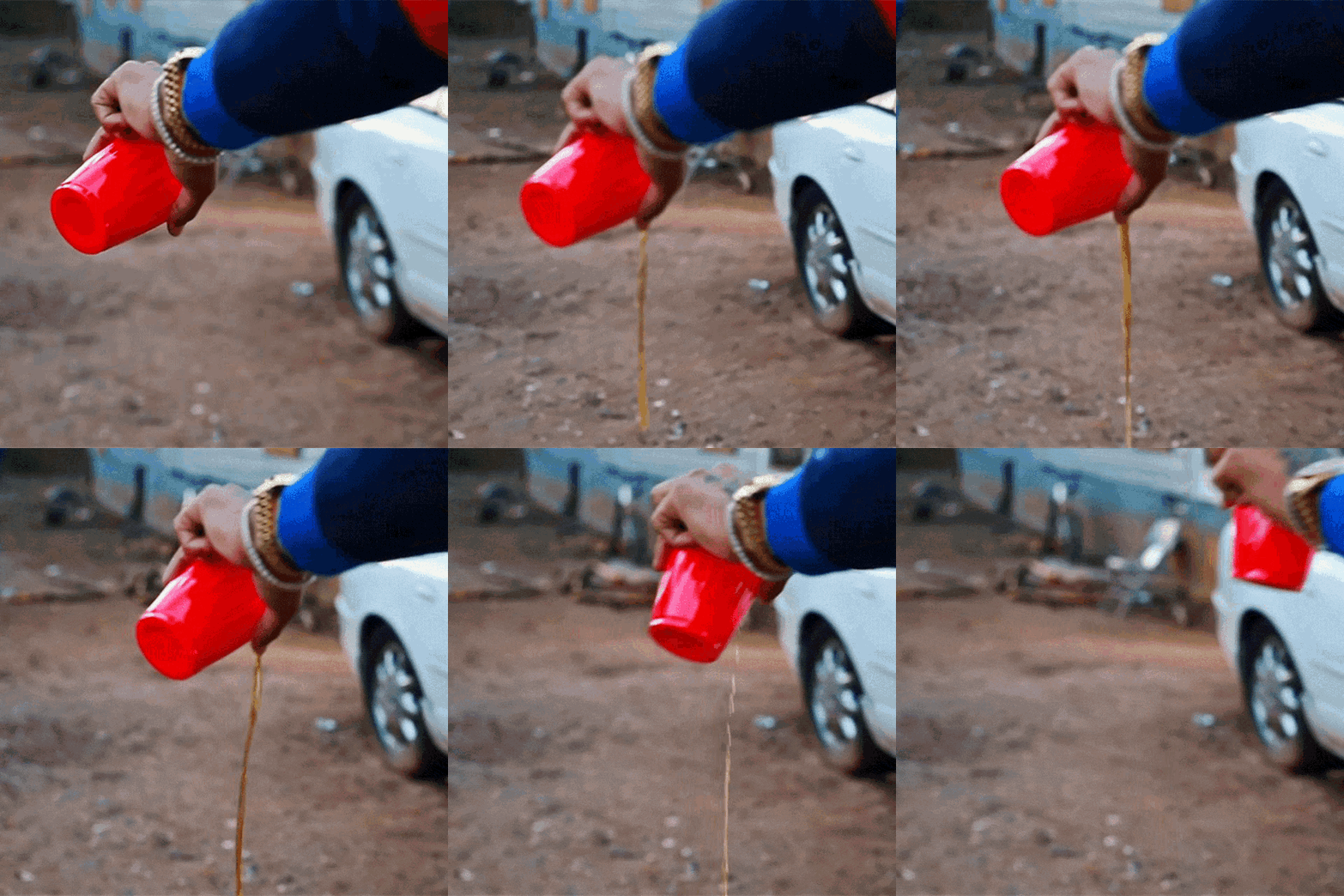
The second trip was for connection and solidarity. I sat by the headstone and toasted with my flask to his life. I poured a little out. I let the hate go that day.
The third trip was to simply pay respect. Sobering up is funny that way.
The freest you can be is at a cemetery. There’s no one alive to judge you.
I still visit periodically. My grandfather is buried in the same cemetery, so I experience a full range of emotions driving between two graves — a man I knew and loved dearly, and a man I never knew and neither hate nor love. Two completely different men, both deeply rooted in who I am. Both in the source code.
Reflect on Self
Your earliest memory is not decoration. It’s data.
What’s yours? What were you wearing? Who were you with? What did it feel and smell like?
And your three defining moments — the ones that actually changed the architecture of who you are, not just the ones that feel significant in retrospect?
How have they made you who you are today?
Sit with that. The answers don’t come fast. But when they do, you’ll understand your operating system better than any therapy session, any self-help book, and definitely better than any documentary can tell you.
You are not your guru. You never were. But you might be your own best diagnostic tool — if you’re willing to run the scan.
This is The Human Player. Bodies, screens, and the systems that run both. If this prompted something, share it with someone who’s never asked themselves these questions. Subscribe for more.